


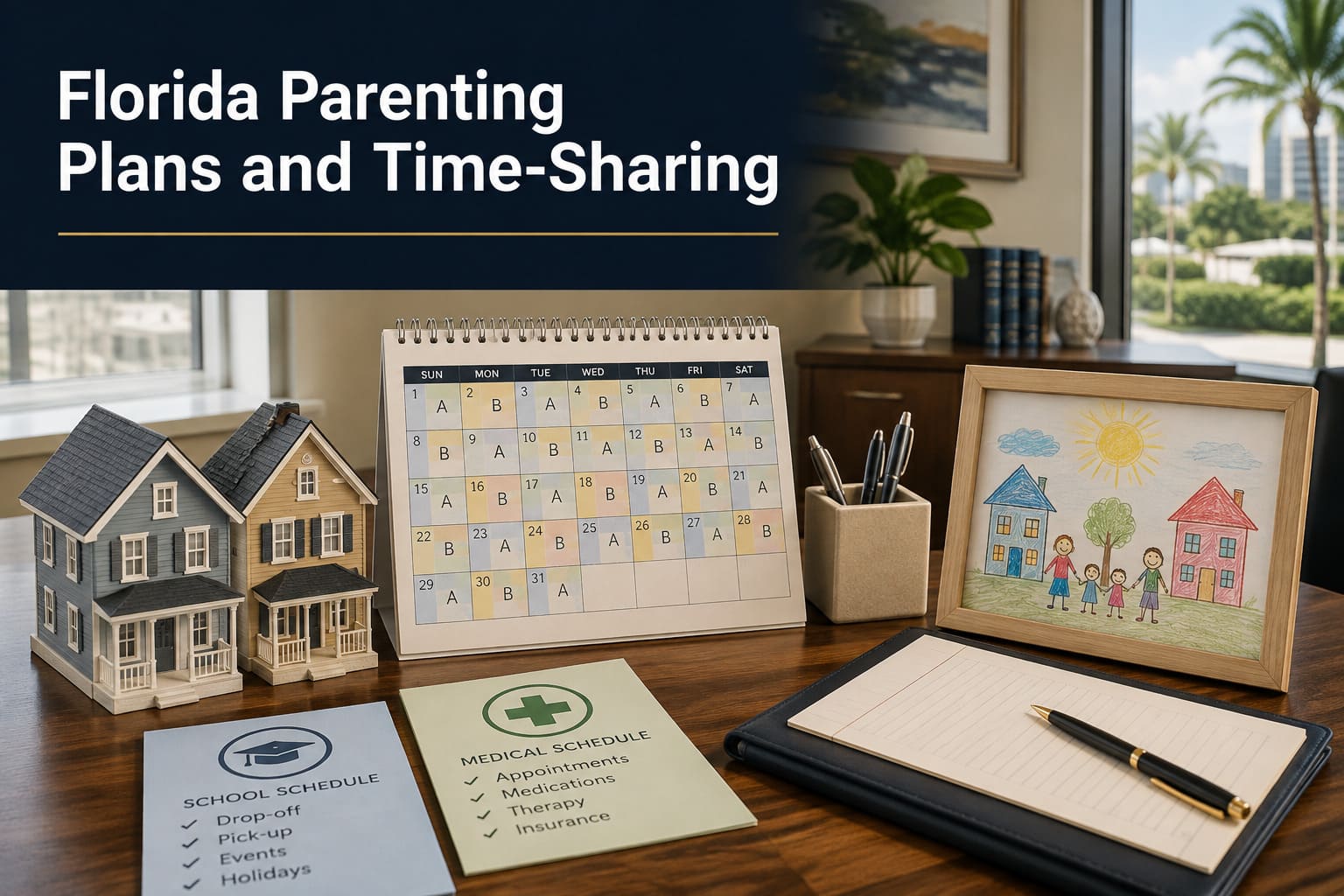
08 Jul What Florida Parents Should Know About Parenting Plans and Time-Sharing
Divorce and separation can change nearly every part of a family’s daily routine. For parents, one of the most important questions is how they will continue raising their children from separate households. In Florida, this issue is generally addressed through a parenting plan and a time-sharing schedule.
A well-designed parenting plan does more than divide days on a calendar. It provides a practical framework for parental responsibilities, communication, school decisions, healthcare, holidays, transportation, and other issues that can affect a child throughout the year. Understanding the purpose of a parenting plan can help parents approach the process with clearer expectations and a stronger focus on their children’s needs.
What Is a Florida Parenting Plan?
A parenting plan is a court-approved document that explains how parents will share the rights and responsibilities associated with raising their child. Florida law generally requires a parenting plan in cases involving time-sharing with a minor child. Parents may agree on a proposed plan, but the court must determine that the arrangement is in the child’s best interests. If the parents cannot agree, the court may establish the plan after considering the circumstances of the family.
Florida law uses the terms “parental responsibility” and “time-sharing” instead of relying only on the familiar terms “custody” and “visitation.” Parental responsibility concerns how important decisions are made. Time-sharing describes when the child will spend time with each parent.
The details matter. A vague agreement may create uncertainty about school nights, pickup locations, extracurricular activities, vacations, or last-minute schedule changes. A thorough plan can reduce misunderstandings by establishing expectations before a disagreement occurs.
What Should a Parenting Plan Address?
Every family is different, and a parenting plan should reflect the child’s age, needs, school schedule, activities, and relationship with each parent. Florida law provides a framework, but the final plan should be specific enough to guide the family in everyday situations.
A parenting plan commonly addresses:
- How each parent will share responsibility for daily parenting tasks
- Who will make decisions involving education, healthcare, activities, and other important matters
- The regular weekly and weekend time-sharing schedule
- Holiday, birthday, school-break, and summer arrangements
- Transportation responsibilities and exchange locations
- How parents will communicate with each other about the child
- How each parent may communicate with the child when the child is with the other parent
- The address that will be used for school registration and other legal purposes
How Florida Courts Evaluate the Child’s Best Interests
The child’s best interests guide Florida parenting decisions. The court may consider numerous statutory factors rather than relying on one single issue. These factors include each parent’s ability to support a close parent-child relationship, honor the schedule, remain informed about the child’s life, and place the child’s needs ahead of parental conflict.
Courts may also consider the child’s home, school, and community record; the geographic practicality of the proposed schedule; the parents’ ability to communicate; the child’s developmental needs; and evidence involving domestic violence, abuse, neglect, substance misuse, or other safety concerns. The court can examine how parenting responsibilities were divided before and during the case as well as whether each parent is likely to provide a stable and consistent routine.
There is no universal schedule that is best for every child. A plan that works for parents living near one another may not work when they live far apart. The needs of a toddler may differ from those of a teenager with demanding academics, sports, employment, and social commitments.
Building a Workable Time-Sharing Schedule
A successful schedule should be detailed, realistic, and centered on the child rather than the convenience or preferences of either parent alone. Parents should consider school start times, commuting distance, homework, medical needs, activities, childcare, and each parent’s work obligations.
Consistency is particularly important during the transition from one household to two. Children often benefit from knowing where they will be, who will pick them up, and when they will see each parent again. The plan should also identify transportation duties, exchange locations, and an approved communication method.
Shared Parental Responsibility and Major Decisions
Florida courts commonly consider shared parental responsibility, under which both parents participate in major decisions affecting the child. Depending on the facts, the court may assign ultimate decision-making authority over a particular subject to one parent or order another arrangement permitted by law.
Can a Parenting Plan Be Changed?
Families evolve. Children change schools, parents obtain new jobs, and schedules that once worked may become impractical. However, a parent should not assume that an existing court order can be changed informally or unilaterally.
Under Florida law, modifying a parenting plan or time-sharing schedule generally requires the legal standard for modification to be satisfied, including a substantial and material change in circumstances and a determination that the requested change is in the child’s best interests. The precise facts and procedural requirements are important. Parents who agree to a change should still consider having it properly documented and submitted for court approval.
A proposed move may raise additional legal issues. Florida has specific relocation requirements. A parent considering a move with a child should obtain legal advice before making commitments or changing the child’s residence.
Speak With a Boca Raton Family Law Attorney
Parenting plans affect a family’s daily life long after a divorce case ends. Careful planning can provide stability for children and reduce future conflict between parents. Whether you are preparing an initial parenting plan, responding to a proposed schedule, or considering a modification, legal guidance can help you understand your rights and responsibilities.
Loomis & Loomis Divorce Lawyers represents clients in Boca Raton and throughout Palm Beach and Broward counties in divorce and family law matters. Contact the firm to discuss your circumstances and the next steps that may be available in your case.
This article is provided for general informational purposes only and does not constitute legal advice. Florida law may change, and the outcome of any family law matter depends on its specific facts. Reading this article does not create an attorney-client relationship.